
09.09.26 • Moss Utilities
Mandrel Testing for Conduit: Why 100% Clear Pathways Are Non-Negotiable for Data Centers
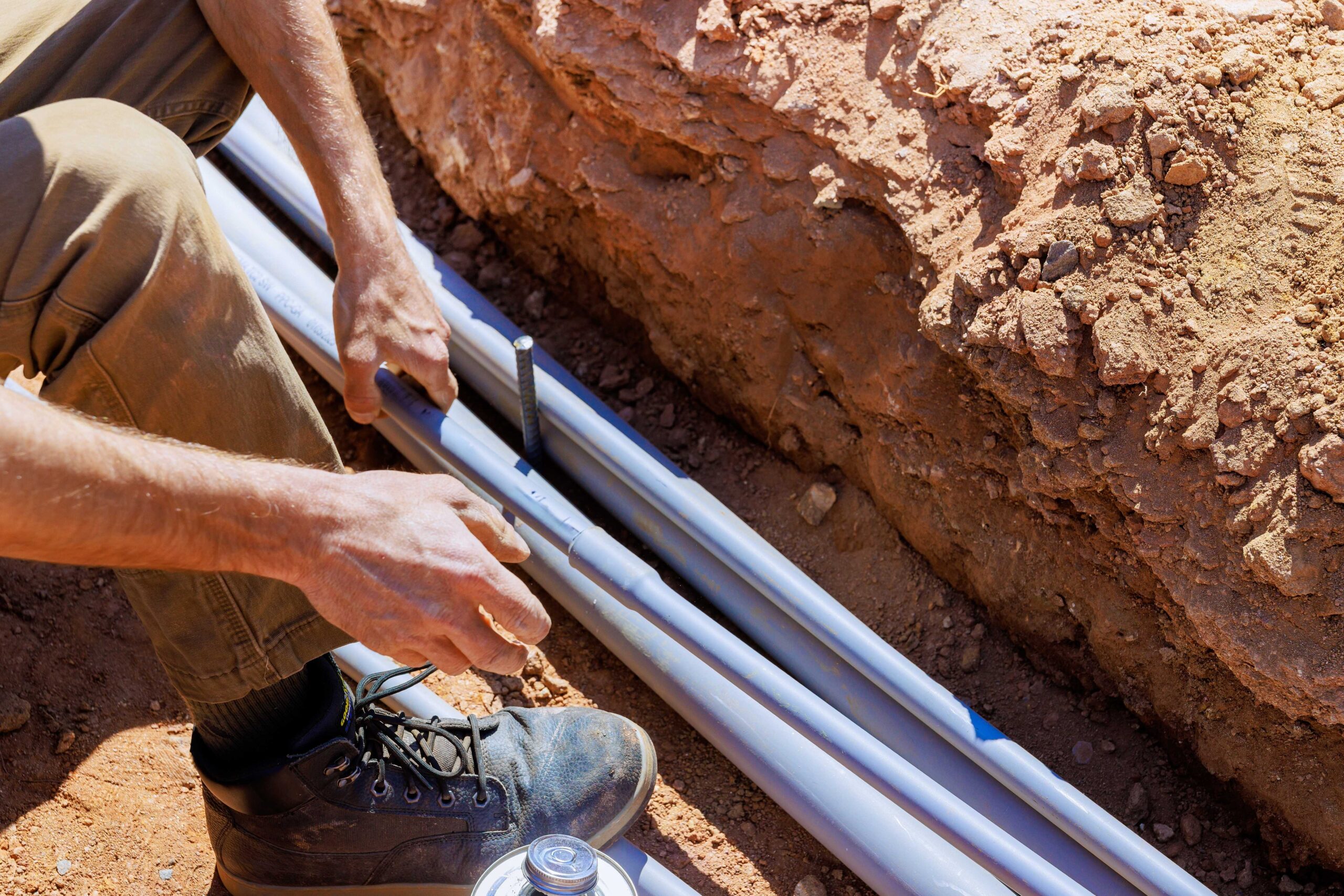
Before every data center cable pull, an experienced utilities contractor will always perform mandrel testing for conduit performance. Skipping the mandrel testing can have a significant impact on the project…the difference between a duct bank where cables move smoothly vs. bringing in a redundant crew to fix the issues (and delay the project timeline).
Before these lines are installed for a data center, every foot of the conduit needs to be tested and proven so that the fiber and power can be installed. In this article, you will learn more about mandrel testing for conduit installation and what standards need to be maintained in order to ensure success with the installation.
What a Mandrel Test Actually Checks
When a contractor is talking about mandrel testing for data center conduit, it actually covers a range of tests relating to both the electrical conduit and sewer pipe. It’s essential to ensure that there is a completely clear pathway that is free of obstructions. This testing does not allow for acceptable tolerance. Instead, the goal is to make sure that the cable pull pathway is functioning correctly.
During a mandrel test for conduit installation, an appropriately sized mandrel is physically pulled through the full length of the conduit. This process confirms that there is nothing blocking the line placement. Additionally, the contractor is looking for anything that could potentially damage the lines, such as spots where the lines could be crushed, affected by debris, or bent outside of the tolerance specs. Testing is critical to ensure that the real lines are not damaged during the actual pull.
When a mandrel (sized close to the internal diameter of the conduit) is pulled through successfully using a wench or manpower, if everything passes freely from end to end, then the conduit is certified that it is clear for the cable to be placed.
Why Mandrel Testing Can’t be Skipped in Data Center Construction
Since data centers have redundancy requirements, the cost of a failed pull is quite expensive compared to the expenses related to proofing conduit ahead of time. This proactive approach ensures that everything is ready to go before the actual cable installation occurs.
Another reason why testing matters is because data center timelines are often tight. When there is no slack in the timeline, then a failure of the mandrel testing after concrete encasement is complete will push the construction timeline out by weeks and take a toll on the entire project. Our team is proactive in the testing phase to avoid these issues.
Finally, keep in mind that if a cable is snagged or damaged mid-pull, then the costs are much higher than simply replacing the cable. Resulting expenses often include re-excavating the fully encased duct bank, which is much more expensive than it would have been to take time for duct bank proofing before the cable pull.
What Causes a Conduit to Fail: Mandrel Testing Issues That Must Be Addressed
What causes a conduit to fail mandrel testing? Here are several things that might cause failure during a mandrel test:
- Damaged Conduit: One of the most common types of failures is when the conduit has been crushed or is out-of-round. For example, this issue often occurs if heavy equipment drives over the trench before the backfill is complete.
- Pour Complications: If there is a mistake made with the pour and debris or slurry concrete gets into the wrong spaces during the pour, then it could prevent a successful pull.
- Bends Outside of Spec: Another common issue is when the conduit causes bends in the cables that are outside of the project-specific requirements. These bends can prevent a mandrel from passing through and eventually cause damage if the actual cables are placed.
How Our Team at Moss Utilities Ensures Success on Data Center Duct Banks
When you choose Moss Utilities, you can have the peace of mind of knowing that our experienced team delivers quality results on every project. We plan and test every detail of the utility installation to deliver the exact specifications that are listed in the plans.
We always make sure that proofing happens before concrete encasement, which allows us to catch potential problems early (while it is still affordable to fix them). Then, after the encasement is done, we always test everything again to ensure that nothing was damaged or shifted during the pour.
Full documentation is kept every step of the way, including every run that is completed. This gives both the general contractor and the property owner clear records showing that each section of conduit was proofed and passed. The documentation shows that everything is ready to go before the cable installation begins.
FAQs
What is a mandrel test for electrical conduit?
This test uses a properly sized mandrel that is pulled through the full length of conduit. The purpose of the test is to confirm that the whole pathway is clear of obstructions and to avoid crushing or bending when the cables are placed.
Is mandrel testing the same for sewer pipe and electrical conduit?
While mandrel testing is done for both sewer pipes and electrical conduits, there are different testing requirements for each. Electrical conduits require that the pathway be completely clear and free of obstructions. On the other hand, sewer pipe testing has an acceptable deflection tolerance.
Should conduit be mandrel tested before or after concrete encasement?
The best approach is to complete conduit mandrel testing both before and after encasement. When proofing is done before encasement, then problems are identified when they are the cheapest to fix. Then proofing again after encasement verifies that nothing was damaged during the pour.
What happens if a data center conduit fails mandrel testing after the duct bank is poured?
If there is a failed mandrel test, then it usually means that the section needs to be excavated again so that repairs can be done. This increases the overall project cost and causes severe delays in construction.
Request a Bid from a Utilities Contractor You Can Trust
Our team at Moss Utilities takes a proactive approach by proofing every duct bank before and after encasement. This process ensures that your data center’s cable pull can happen on schedule, without any potential risks or damage to the cables.
For more information about available civil contracting services, reach out to us at Moss Utilities to discuss your upcoming project.