
11.24.26 • Moss Utilities
How a New Water Main Gets Accepted in Texas: Pressure Testing, Disinfection, and Bac-T Explained
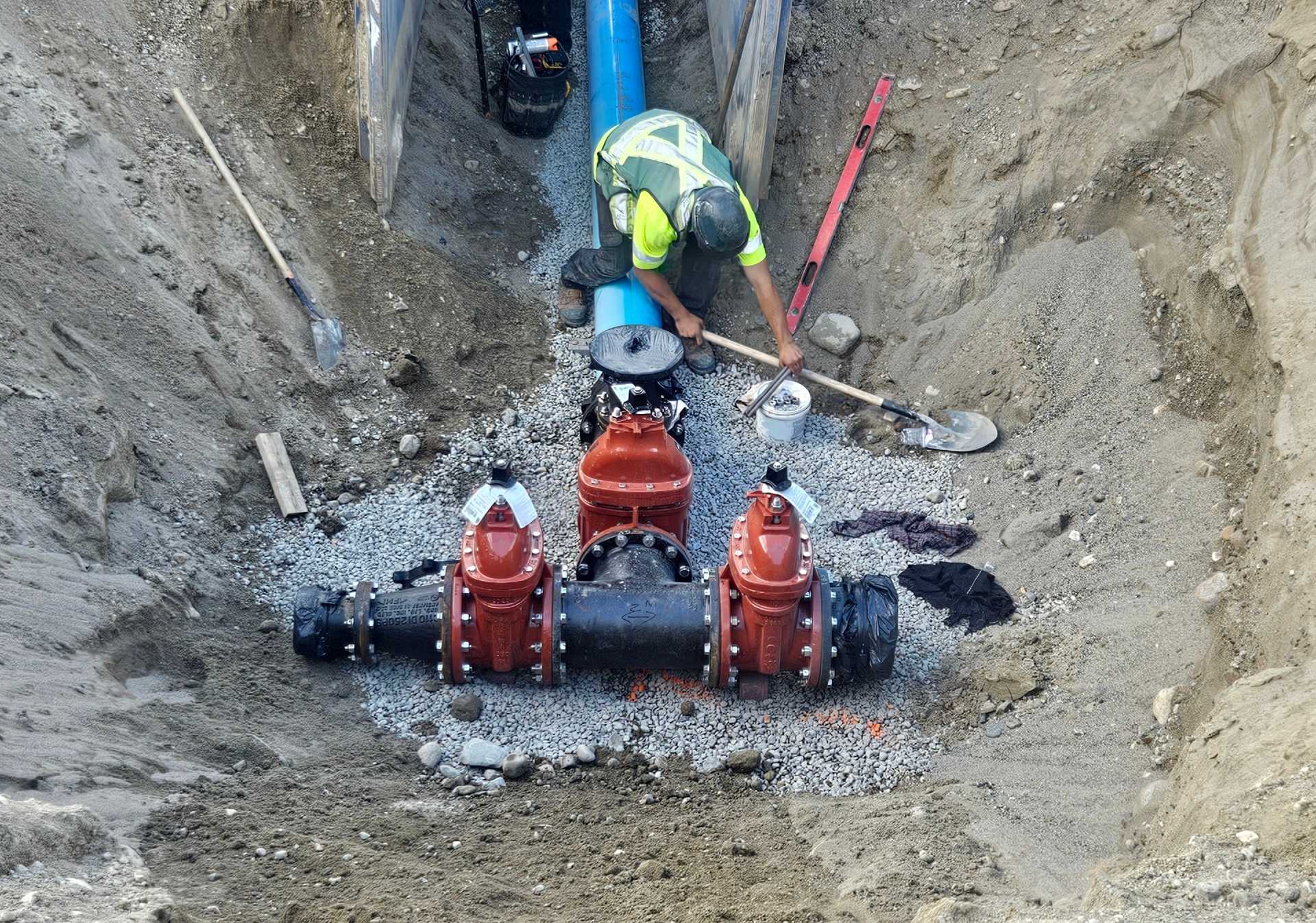
Once a new water main is installed in Texas, there are a few specific tests that it needs to pass in order to be accepted: a pressure and leakage test, chlorine disinfection, and clean bacteriological samples must be verified. It’s important to understand that all of these requirements must be met before the line is approved to be in service.
In this article, we are taking a closer look at how water main acceptance testing works, as well as the step-by-step processes to follow in order to avoid issues in the inspection phase.
Who Sets the Rules for Water Main Acceptance
Here in the state of Texas, the baseline is set by the TCEQ’s water distribution rule, 30 TAC §290.44. Certain AWWA standards need to be met for different testing and inspection requirements.
Additionally, there are many cities and utility companies that have stricter specs and requirement controls. So, it’s important to verify local requirements before bidding on the project, because there might be specific details that need to be addressed in the scope of work.
Step 1: Water Main Pressure Test Requirements
The first thing that needs to be addressed is the pressure of the water main, which is measured with a hydrostatic test. The main is filled with water, then the water is held there at a set pressure for a specific amount of time. The site plans and city specs will determine the specific pressure and time requirements that need to be met.
There is an allowable leakage rate, and this testing is measured in psi. Every test that is completed must be logged with information about who ran the test, as well as the start and end pressures. Make sure to hang on to this documentation, because it’s possible that the inspector might ask for this information.
Some of the most common failures that might be discovered in this stage include:
- Bad joints
- Loose or unrestrained fittings
- Trapped air
- Leaking valves
- Poorly set connections
No matter how small the total loss of water, a visible leak must always be repaired.
Step 2: AWWA C651 Disinfection
The next part of the testing process relates to disinfection. The pipe that starts at the job site needs to be cleaned, and it’s important for the crews to keep the pipe out of muddy trench water. The open ends of the pipes should be capped when work is done each day to help keep the debris and dirt out.
Before disinfection begins, the crew might flush the line or push a foam “pig” through it. This step cleans out anything that might have been left behind during construction.
The actual disinfection can be done using chlorine tablets or a slug of strong chlorine. Another option is to set up a continuous feed of chlorine into the system, which means that the pipe is filled with chlorinated water that sits for 24 hours.
Consult with the utility or engineer on the project to determine the best method of disinfection for your project’s unique needs.
Step 3: Flushing and Dechlorination
Once the disinfection step is done and the chlorine has had enough time to work, the system needs to be flushed to remove the chlorinated water. The crew keeps flushing until the water at the end of the line tastes and tests like the water that is already in the system.
Since chlorine can harm the ecosystem and soil, it must be neutralized using safe products to break down the chlorine. The water always needs to be double-checked before it is released, especially since there are often city limits that restrict what can go into creeks and storm drains. So, this step is important to ensure compliance.
Once this flushing is done, the line is ready to go through water quality testing.
Step 4: Bac-T Sampling
Now it’s time for water main bacteriological testing, which uses samples that are taken at different set points: usually every 1,200 feet, as well as at the end of the line and on branches. These samples are run by a certified lab, and every result must show that it is coliform-negative.
What happens if a water main fails a Bac-T test? The first priority is to identify the underlying cause so that it can be fixed. For example, common causes might be contamination in a pipe or trench water that got into the system.
Then, the steps outlined above are repeated: re-flushing, chlorinating the water again, and resampling everything.
Important note: the water main should never be connected to the live system until the utility has confirmed the passing results in writing.
FAQ
How long is a water main pressure test?
The duration of the water main pressure test depends on the city’s requirements and the specific plans for each project. It’s common for these tests to be completed for a minimum of two hours.
What chlorine level is used to disinfect a new water main?
It depends on the chlorine method that is being used for disinfection. For example, a continuous feed method will usually use a minimum of 25 mg/L, held for 24 hours, with a residual of at least 10 mg/L afterward.
Does a failed Bac-T test mean the pipe has to be replaced?
Rest assured knowing that a failed test doesn’t necessarily mean that the pipe needs to be replaced. Make sure to always keep the paperwork in order to get final acceptance, including test reports, chlorine logs, and lab results.
Expert Support for Water Infrastructure in DFW
If you need assistance with utility lines and water infrastructure in DFW, then our expert team at Moss Utilities is here to help. We bring years of industry experience and a strong commitment to quality for every project. We’ll make sure that the right testing and disinfection methods are built into the schedule, with the goal of helping your lines be ready for acceptance on time.
For more information and customized recommendations from a civil contractor, reach out to us at Moss Utilities.