
10.13.26 • Moss Utilities
Gravity Sewer vs. Force Main: Which System Does Your Project Need?
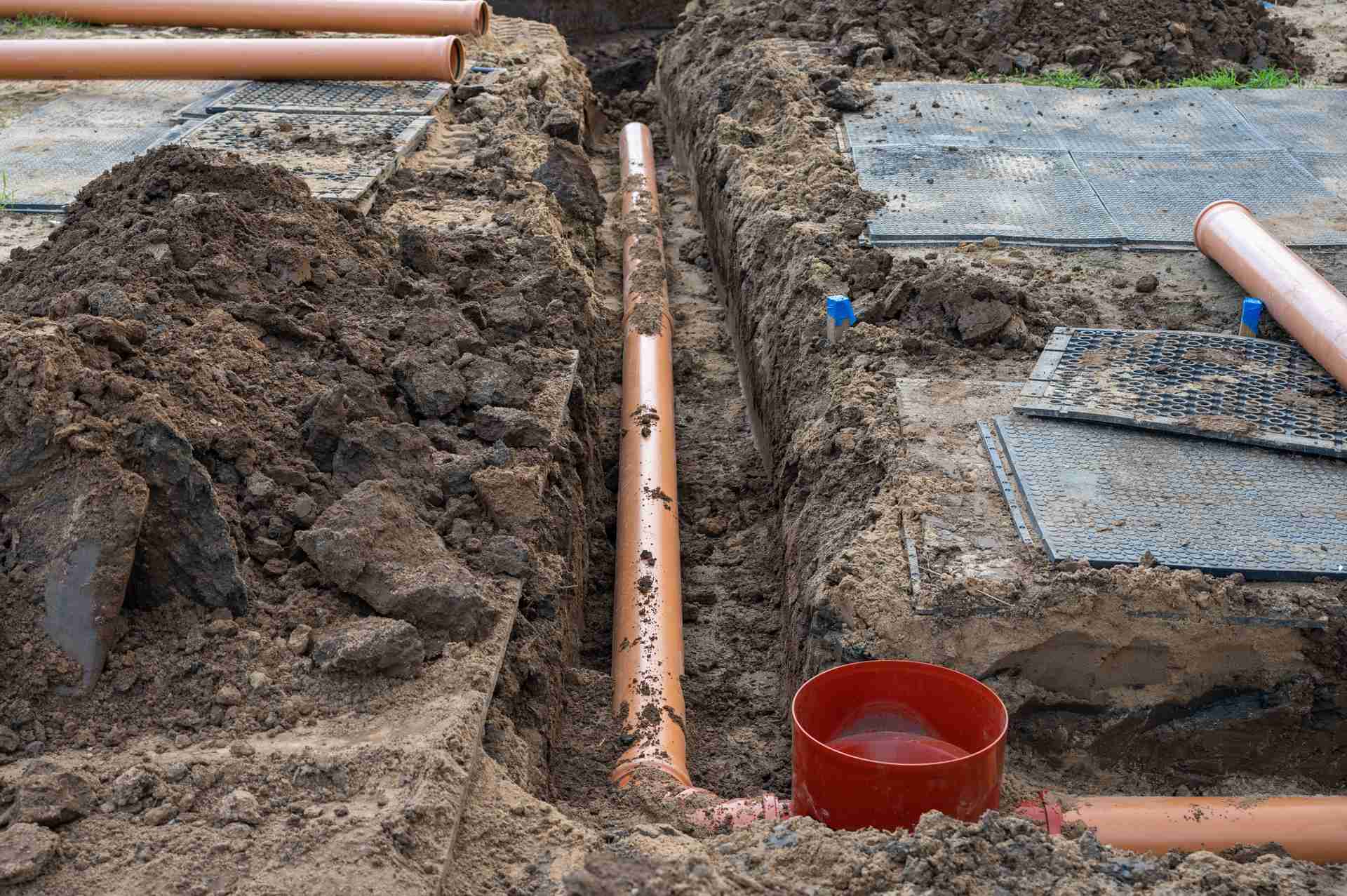
When making the decision to install a gravity sewer vs force main, it’s essential to consider the overall terrain and slope on the property. For example, gravity sewers can work well to move wastewater naturally because of the slope. But if you need to push wastewater up a hill or across flat ground, then a force main is a better solution.
In this article, we are comparing these two systems so that you can understand more about how each one works. Our team at Moss Utilities is here to help if you need customized recommendations or more information about underground installation options.
How a Gravity Sewer Works
When there is a downhill slope, a gravity sewer can be an effective design because the pipes are laid to match the natural pitch on the property. No pumps are needed because the wastewater will move as gravity pulls it down the pipes and to the treatment point.
One of the benefits of a gravity sewer system is that the operating costs are low and there is no need for pump installation. But you must make sure that there is enough of an elevation drop to prevent standing water. Also, deeper trenches can be expensive, depending on your customized utility layout.
All gravity sewer systems are designed with manholes that are placed at certain intervals. This way, crews can easily access the system when cleaning or inspection is needed.
Gravity lines are a great solution when the conditions are right, especially because they are so simple and dependable. Since there are no mechanical parts, the system keeps running with minimal maintenance.
How a Force Main Works
You will see that there is a significant difference between a gravity sewer vs. force main system. If you need to move wastewater across flat ground or even uphill, then it’s necessary to use pressurized pipes. With a force main installation, there is a lift station that collects the water and then pumps it through the pipes.
This installation process is often more involved since the crew needs to lay both the pipes and the mechanical components. The most important factor that will affect when to use a lift station instead of a gravity sewer comes down to the elevation of the site. If gravity isn’t sufficient to move the wastewater to the connection point (because the depth is too shallow), then pumping can be used to solve this issue.
A force main design requires more precision and maintenance, especially since the pipes are run under pressure. It’s critical to ensure that the joints and fittings are designed for the anticipated pressure, with built-in release valves at the high points.
Gravity Sewer vs Pressure Sewer Cost Comparison
The cost of your installation project depends on multiple on-site factors, which is why it’s best to contact our team at Moss Utilities for a customized estimate. We’ll help you determine the ideal system for your unique needs, as well as the right approach to complete the installation on schedule so there are no delays for the rest of your project.
Even though a gravity sewer is a simpler design, the costs can sometimes be higher than a force main because deep excavation might be required. On the other hand, a force main might have lower trench costs, but adding the pump equipment (and ongoing maintenance and power requirements) can increase your total out-of-pocket expenses.
Both types of systems will need regular maintenance, which can affect your total costs:
- Gravity Systems: Since this design can be affected by infiltration and inflow risks, there is a possibility of issues that need to be fixed (especially as the pipes get older).
- Force Main Systems: Over time, it’s expected that the pumps will need to be maintained. Regular inspections are critical to ensure the system is working properly. Eventually, the pumps will need to be replaced.
In most cases, gravity systems are more expensive to install, but the long-term costs are higher for force main systems due to ongoing repairs and maintenance.
The Ideal Sanitary Sewer Design for North Texas Clay Soil
Here in North Texas, we have expansive clay conditions, which means that the ground shrinks and swells depending on the moisture content in the soil. As these shifts happen with weather conditions throughout the year, they can put stress on the joints and even move the pipes. So, regardless of which water management system you choose, it’s critical to invest in proper bedding and trench design.
In other parts of northern Texas, there are rock layers that can increase excavation costs. Since the ground conditions vary from one site to the next, it’s important to find an experienced utility contractor to inspect your site and provide personalized recommendations.
Factors that Influence the Water Management System on a DFW Site
Reach out to a force main sewer contractor in Dallas/Fort Worth to determine the ideal water management system that you need. Some of the most important factors that we consider include:
- Topography
- Elevation of the treatment connection
- Soil and rock conditions
- Project size
- Future growth on the site
Sometimes, both gravity sewer and force main systems are used together. For example, in master-planned communities, it might be possible to use gravity lines that feed into a lift station, then force main pipes to move the wastewater to the next destination.
Also, it’s essential to check the city or utility district guidelines. Our team at Moss Utilities will ensure that your plans align with local regulations and recommendations.
FAQs
Does a gravity sewer ever need a pump?
The main gravity sewer pipes don’t need a pump because the water flows naturally based on the pitch. But if there is anything that prevents gravity flow, then a lift station might need to be added.
Which system costs less to install?
Site conditions vary, which is why the total cost needs to be determined by the specific scope of work that will be followed by the installation crew. In most cases, gravity sewers are more expensive upfront due to more strenuous excavation costs. But the long-term costs can be more expensive with force main systems.
The Force Main Sewer Contractor That Dallas/Fort Worth Developers Rely On
If you are a developer and need help with utility installation, then our team at Moss Utilities is here to help. Reach out for a consultation so that we can review your plans and send an estimate for the project.